
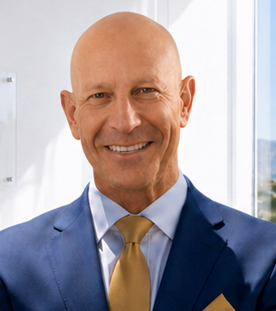
Paul E Rosenfeld M.S., Ph.D.
Santa Monica, CA 90401
Office: 310-795-2335
Dr. Paul E. Rosenfeld is Founder and Principal Scientist of RoseyFields LLC and a nationally recognized plaintiff environmental expert witness with 26+ years of experience. He has a Ph.D. in Environmental Chemistry and specializes in forensic asbestos exposure and dose reconstruction, air dispersion modeling, exposure assessment, environmental forensics, chemical fate and transport, and human-health risk assessment. He has testified in trials or depositions over 150 times in state and federal courts in 31 states and has extensive experience addressing Daubert and Rule 702 challenges. Dr. Rosenfeld spent approximately 10 years at UCLA. He co-authored The Risks of Hazardous Waste.
- Asbestos
- Carbon Monoxide Poisoning
- Chemicals
- Chemistry
- Environmental
- Environmental Engineering
- Epidemiology
- Explosions
- Hazardous Materials
- Refineries
- Q: Please list your professional accreditations, degrees, licenses, and certificates granted:
- A: Ph.D.; UCLA School of Public Health — Lecturer (Assistant Researcher), 2007–2011; UCLA School of Public Health — Adjunct Professor, 2003–2006; UCLA Environmental Science and Engineering Program — Doctoral Intern Coordinator, 2002–2004; UCLA Institute of the Environment — Research Associate, 2001–2002; San Diego State University — Adjunct Professor, 1999–2001; historical dose-calculation training through the U.S. Navy.
- Q: Please list your affiliations or memberships in any professional and/or industry organizations:
- A: Hazwopper 40 Certified
- Q: Please list any teaching or speaking experience you have had, including subject matter:
- A: The Science for Perfluorinated Chemicals (PFAS): What Makes Remediation So Hard? — Law Seminars International, Seattle, WA, May 9–10, 2018.
Air Dispersion Modeling of Volatile Organic Emissions from Multiple Natural Gas Wells in Decatur, Texas — 44th Western Regional Meeting, American Chemical Society, Santa Clara, CA, October 3–6, 2013.
Atrazine: A Persistent Pesticide in Urban Drinking Water — Urban Environmental Pollution, Boston, MA, June 20–23, 2010.
Bringing Environmental Justice to East St. Louis, Illinois — Urban Environmental Pollution, Boston, MA, June 20–23, 2010.
PFOA and PFOS Contamination in Drinking Water from the Use of Aqueous Film Forming Foams (AFFF) at Airports in the United States — Ground Water Summit/Ground Water Protection Council Spring Meeting, Tucson, AZ, April 19–23, 2009.
Cost to Filter Atrazine Contamination from Drinking Water in the United States — Ground Water Summit/Ground Water Protection Council Spring Meeting, Tucson, AZ, April 19–23, 2009.
Dioxin and Furan Blood Lipid Concentrations in Populations Living Near Four Wood Treatment Facilities in the United States — International Conference on Modeling, Monitoring and Management of Air Pollution, Tallinn, Estonia, July 20–22, 2009.
Moss Point Community Exposure to Contaminants from a Releasing Facility — 23rd Annual International Conference on Soils, Sediment and Water, University of Massachusetts Amherst, October 15–18, 2007.
The Repeated Trespass of Tritium-Contaminated Water into a Surrounding Community from Repeated Waste Spills from a Nuclear Power Plant — 23rd Annual International Conference on Soils, Sediment and Water, Amherst, MA, October 15–18, 2007.
Somerville Community Exposure to Contaminants from Wood Treatment Facility Emissions — 23rd Annual International Conference on Soils, Sediment and Water, Amherst, MA, October 15–18, 2007.
Production, Chemical Properties, Toxicology & Treatment Case Studies of 1,2,3-Trichloropropane (TCP) — AEHS Annual Meeting, San Diego, CA, March 2007.
Blood and Attic Sampling for Dioxin/Furan, PAH, and Metal Exposure in Florala, Alabama — AEHS Annual Meeting, San Diego, CA, March 2007.
Dioxin-Containing Attic Dust and Human Blood Samples Collected Near a Former Wood Treatment Facility — DIOXIN2006, Oslo, Norway, August 21–25, 2006.
Dioxin-Containing Attic Dust and Human Blood Samples Collected Near a Former Wood Treatment Facility — APHA 134th Annual Meeting & Exposition, Boston, MA, November 4–8, 2006.
Fate, Transport and Persistence of PFOA and Related Chemicals — Mealey’s C8/PFOA Science, Risk & Litigation Conference, Philadelphia, PA, October 24–25, 2005.
Brominated Flame Retardants in Groundwater: Pathways to Human Ingestion, Toxicology and Remediation — PEMA Emerging Contaminant Conference, Irvine, CA, September 19, 2005.
Fate, Transport, Toxicity, and Persistence of 1,2,3-TCP — PEMA Emerging Contaminant Conference, Irvine, CA, September 19, 2005.
Fate, Transport and Persistence of PBDEs — Mealey’s Groundwater Conference, Marina del Rey, CA, September 26–27, 2005.
Fate, Transport and Persistence of PFOA and Related Chemicals — International Society of Environmental Forensics: Focus on Emerging Contaminants, Virginia Beach, VA, June 7–8, 2005.
Fate, Transport, Persistence and Toxicology of PFOA and Related Perfluorochemicals — National Groundwater Association Ground Water and Environmental Law Conference, Baltimore, MD, July 21–22, 2005.
Brominated Flame Retardants in Groundwater: Pathways to Human Ingestion, Toxicology and Remediation — National Groundwater Association Ground Water and Environmental Law Conference, Baltimore, MD, July 21–22, 2005.
Tert-Butyl Alcohol Liability and Toxicology: A National Problem and Unquantified Liability — National Groundwater Association Environmental Law Conference, Chicago, IL, May 5–6, 2004.
Perchlorate Toxicology — American Groundwater Trust, Phoenix, AZ, March 2004.
Perchlorate Contamination of the Colorado River — Meeting of Tribal Representatives, Parker, AZ, 2004.
A National Damage Assessment Model for PCE and Dry Cleaners — California Ground Water Association Drycleaner Symposium, Sacramento, CA, April 7, 2004.
Two-Stage Biofilter for Biosolids Composting Odor Control — Seventh International In Situ and On-Site Bioremediation Symposium/Battelle Conference, Orlando, FL, June 2003.
Understanding Historical Use, Chemical Properties, Toxicity and Regulatory Guidance of 1,4-Dioxane — National Groundwater Association Southwest Focus Conference, Phoenix, AZ, February 20–21, 2003.
Underground Storage Tank Litigation and Remediation — California CUPA Forum, Anaheim, CA, February 6–7, 2003.
Underground Storage Tank Litigation and Remediation — EPA Underground Storage Tank Roundtable, Sacramento, CA, October 23, 2002.
Understanding Odor from Compost, Wastewater and Industrial Processes — International Water Association Sixth Annual Symposium on Off Flavors in the Aquatic Environment, Barcelona, Spain, October 7–10, 2002.
Using High Carbon Wood Ash to Control Compost Odor — International Water Association, Barcelona, Spain, October 7–10, 2002.
Biocycle Composting for Coastal Sage Restoration — Northwest Biosolids Management Association, Vancouver, WA, September 22–24, 2002.
Using High-Carbon Wood Ash to Control Odor at a Green Materials Composting Facility — Soil Science Society Annual Conference, Indianapolis, November 11–14, 2002.
Two-Stage Biofilter for Biosolids Composting Odor Control — Water Environment Federation, Anaheim, CA, September 16, 2000.
Wood Ash and Biofilter Control of Compost Odor — Biofest, Ocean Shores, 2000.
Bioremediation Using Organic Soil Amendments — California Resource Recovery Association, Sacramento, CA, 2000.
An Evaluation of Ash Incorporation with Biosolids for Odor Reduction — Soil Science Society of America, Salt Lake City, UT, 1999.
Oat and Grass Seed Germination and Nitrogen and Sulfur Emissions Following Biosolids Incorporation with High-Carbon Wood Ash — Water Environment Federation 12th Annual Residuals and Biosolids Management Conference, Bellevue, WA, 1998.
Comparison of Microbial Activity and Odor Emissions from Three Different Biosolids Applied to Forest Soil — Brown and Caldwell, Seattle, WA, 1998.
Characterization, Quantification, and Control of Odor Emissions from Biosolids Application to Forest Soil — Biofest, Lake Chelan, WA, 1998.
Comparison of Odor Emissions from Three Different Biosolids Applied to Forest Soil — Soil Science Society of America, Anaheim, CA, 199 - Q: On how many occasions have you been retained as an expert?
- A: 2000
- Q: For what area(s) of expertise have you been retained as an expert?
- A: Environmental chemistry, environmental toxicology, environmental forensics, chemical exposure assessment, occupational exposure assessment, retrospective exposure reconstruction, forensic dose reconstruction, cumulative exposure assessment, human health risk assessment, cancer risk assessment, noncancer risk assessment, toxic tort causation, air quality, air pollution, air dispersion modeling, AERMOD modeling, atmospheric dispersion, industrial emissions, fugitive emissions, fugitive dust, particulate matter, source apportionment, chemical fingerprinting, contaminant fate and transport, environmental fate and transport, soil contamination, groundwater contamination, soil vapor, vapor intrusion, environmental sampling, analytical chemistry, interpretation of environmental data, hazardous waste, CERCLA/Superfund matters, RCRA matters, Proposition 65, remediation, industrial hygiene, occupational dust exposure, respirable crystalline silica, silicosis, engineered stone, artificial stone, artificial stone countertops, quartz countertops, countertop fabrication, silica exposure during cutting, grinding and polishing, dust-control effectiveness, respiratory protection, asbestos exposure, asbestos dose reconstruction, bystander asbestos exposure, asbestos-containing materials, PFAS, PFOA, PFOS, AFFF, PFAS fate and transport, PFAS source identification, PFAS exposure assessment, benzene, volatile organic compounds, TCE, trichloroethylene, PCE, perchloroethylene, tetrachloroethylene, ethylene oxide, diesel exhaust, diesel particulate matter, PAHs, benzo[a]pyrene, dioxins, furans, PCBs, lead, arsenic, cadmium, mercury, nickel, barium, chromium, hexavalent chromium, heavy metals, pesticides, combustion emissions, fires and smoke emissions, railroad-related environmental exposures, refinery and petroleum emissions, sulfur processing emissions, hydrogen sulfide, sulfur dioxide, nitrogen oxides, flares and flare destruction efficiency, dermal chemical exposure, inhalation exposure, ingestion exposure, historical occupational exposure, exposure-duration reconstruction, epidemiology, exposure-response relationships, dose-response relationships, silicosis epidemiology, asbestos epidemiology, environmental health, public health risk assessment, and evaluation of whether environmental or occupational exposures are consistent with claimed health risks.
- Q: In what percentage of your cases were you retained by the plaintiff?
- A: 95% Plaintiff, but like to help defendants when needed
- Q: In what percentage of your cases were you retained by the defendant?
- A: 5%
- Q: On how many occasions have you had your deposition taken?
- A: 150+
- Q: When was the last time you had your deposition taken?
- A: 2026
- Q: On how many occasions have you been qualified by a court to give expert testimony?
- A: 100
- Q: On how many occasions have you testified as an expert in court or before an arbitrator?
- A: 16
- Q: For how many years have you worked with the legal industry as an expert?
- A: 26
- Q: What services do you offer? (E.g.: consulting, testing, reports, site inspections etc.)
- A: Environmental chemistry, environmental toxicology, environmental forensics, chemical exposure assessment, occupational exposure assessment, retrospective exposure reconstruction, forensic dose reconstruction, cumulative exposure assessment, human health risk assessment, cancer risk assessment, noncancer risk assessment, toxic tort causation, air quality, air pollution, air dispersion modeling, AERMOD modeling, atmospheric dispersion, industrial emissions, fugitive emissions, fugitive dust, particulate matter, source apportionment, chemical fingerprinting, contaminant fate and transport, environmental fate and transport, soil contamination, groundwater contamination, soil vapor, vapor intrusion, environmental sampling, analytical chemistry, interpretation of environmental data, hazardous waste, CERCLA/Superfund matters, RCRA matters, Proposition 65, remediation, industrial hygiene, occupational dust exposure, respirable crystalline silica, silicosis, engineered stone, artificial stone, artificial stone countertops, quartz countertops, countertop fabrication, silica exposure during cutting, grinding and polishing, dust-control effectiveness, respiratory protection, asbestos exposure, asbestos dose reconstruction, bystander asbestos exposure, asbestos-containing materials, PFAS, PFOA, PFOS, AFFF, PFAS fate and transport, PFAS source identification, PFAS exposure assessment, benzene, volatile organic compounds, TCE, trichloroethylene, PCE, perchloroethylene, tetrachloroethylene, ethylene oxide, diesel exhaust, diesel particulate matter, PAHs, benzo[a]pyrene, dioxins, furans, PCBs, lead, arsenic, cadmium, mercury, nickel, barium, chromium, hexavalent chromium, heavy metals, pesticides, combustion emissions, fires and smoke emissions, railroad-related environmental exposures, refinery and petroleum emissions, sulfur processing emissions, hydrogen sulfide, sulfur dioxide, nitrogen oxides, flares and flare destruction efficiency, dermal chemical exposure, inhalation exposure, ingestion exposure, historical occupational exposure, exposure-duration reconstruction, epidemiology, exposure-response relationships, dose-response relationships, silicosis epidemiology, asbestos epidemiology, environmental health, public health risk assessment, and evaluation of whether environmental or occupational exposures are consistent with claimed health risks.
- Q: What is your hourly rate to consult with an attorney?
- A: $325/hour
- Q: What is your hourly rate to review documents?
- A: $325/hour
- Q: What is your hourly rate to provide deposition testimony?
- A: $6000 a day or 1000/hour
- Q: What is your hourly rate to provide testimony at trial?
- A: $7000/day or $1250/hour
Available Upon Request